A wind-down routine usually fails for the same reason a strict exercise plan does: it was designed for a version of your life that doesn't exist. The one in your head involves candles, a journal, and ten minutes of stretching. The one that shows up on a Tuesday involves a phone at 11:20pm, a dishwasher that needs emptying, and one more episode.
Thirty minutes is enough. It doesn't have to be beautiful or impressive. It has to be short enough to survive a bad night and specific enough that you don't have to think your way through it. That's the whole design brief.
Why Thirty Minutes Is the Right Size
A long routine asks for motivation. A short one asks for structure. Motivation is unreliable by ten in the evening; structure holds up because it takes almost no energy to follow once it's built.
Thirty minutes also fits the space most evenings actually have. It's roughly the gap between finishing the kitchen and getting into bed for real. Stretch it to ninety minutes and it starts competing with everything else you want from the evening — the show, the conversation, the book — and you'll quietly abandon it the first week something else comes up.
There's a second reason to keep it tight. Every choice you make late at night is made with the leftovers of your attention. By the time you're deciding whether to floss, which podcast to put on, and whether to check one more thing, you've spent the day's decision budget. A routine that's already decided for you is a routine that actually happens.
Anchor It to an Action, Not a Time
Most routines get pinned to a clock time — "bed at eleven" — and then fall apart the first time bedtime moves. Anchor the routine to something that already happens instead: the moment you close the kitchen for the night, the moment the last child is in bed, the moment you lock the front door, the moment you take off your work shoes.
Pick one. That action is the starting gun. You don't decide when to start; the closing of the kitchen decides for you.
Then give the routine an end, too. A timer set for thirty minutes is not a gimmick. It stops the routine from quietly expanding into another hour of admin, and it gives you permission to stop. When it goes off, whatever is unfinished is tomorrow's problem.
Three Blocks, in the Same Order Every Night
Think of the thirty minutes as three smaller blocks rather than one long to-do list. Each has a different job, and the order matters because each block makes the next one easier.
Block one: close the day (5–8 minutes)
Clear the surface you'll see first thing in the morning. Write down the two or three things still circling in your head, so your brain can stop holding them. Look at tomorrow's calendar once — once, not four times — and write the single first task of the day on a sticky note. If your phone usually lives in the bedroom, put it on charge somewhere else now.
Block two: reset the space (5–7 minutes)
This is the unglamorous part that makes the rest work. Counters wiped, mugs in the dishwasher, clothes off the chair, bag by the door. Not a deep clean — a five-minute sweep so the room you walk into at seven in the morning isn't already behind. If you live with other people, this block is much easier when it's shared and named out loud.
Block three: settle your body (10–15 minutes)
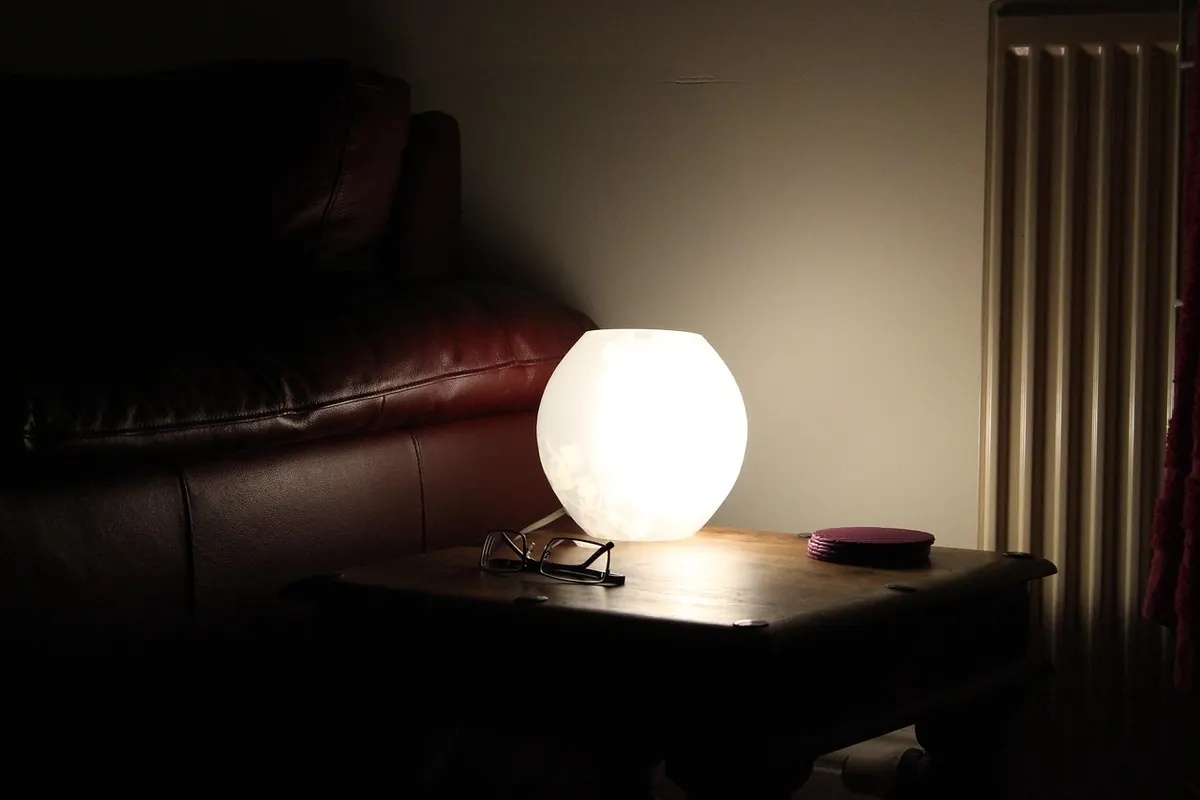
Now the part people actually look forward to. Dim the overhead lights and switch to lamps. Wash up, brush your teeth, do the small physical things your body reads as signals. Then something quiet and undemanding: a book, a few pages of a notebook, a stretch on the floor, a podcast at low volume. Low light, low input, low effort.
A Sample Sequence You Can Copy Tonight
- Minute 0: Kitchen closes. Phone goes on the charger outside the bedroom.
- Minutes 1–6: Counters wiped, mugs in the dishwasher, tomorrow's first task on a sticky note.
- Minutes 7–12: Clothes out for tomorrow, bag by the door, one small reset in the room you'll wake up in.
- Minutes 13–17: Bathroom. Teeth, face, the same three things in the same order.
- Minutes 18–28: Lamps only. Read something on paper, stretch, or sit with a notebook. No feeds, no inbox.
- Minutes 29–30: Lights out, or the last page, whichever comes first.
Copy this as it is for a week before you change anything. You're not trying to find the perfect routine; you're finding out which parts you'll actually do.
Make the Decisions Once, Then Stop Making Them
Decision fatigue is the real enemy here, and it's beaten with pre-decisions, not willpower. The fewer live choices in the last half hour of your day, the more likely the routine runs on its own.
- One order. Same sequence every night. Boring is the point.
- One book, one show, one playlist. Keep it queued so the choice is already made.
- One charging spot. Decide where the phone sleeps and stop renegotiating it.
- One set of clothes. Chosen before you're tired, not after.
- One line in the sand. Pick the thing that ends the day — screens off, kitchen light off, whatever it is — and let it be a rule rather than a mood.
- One written list. Put the routine on paper where you can see it for the first two weeks, so you're not reconstructing it from memory at 10:40pm.
Design the Version for When It Falls Apart
Some nights you get home late, someone is ill, or the evening simply disappears. A routine without a fallback gets abandoned entirely after one bad night, which is how most of them die.
Write a ten-minute version now, while you're calm: teeth, kitchen counter, phone away, lights down. That's it. Four items, no reading, no stretching, no guilt. On the nights the full thirty doesn't fit, you do the short one and count it. The streak that matters is the habit of returning, not the length of any single evening.
One rule makes the fallback work: never skip two nights in a row. One missed night is noise. Two is a new pattern.
Keep It Going Past the First Month
Give any new routine two weeks before you judge it. In the first week it will feel mechanical and slightly silly; that's not a sign it isn't working. By the third week it starts doing something useful — closing the day becomes the signal that the day is over, and you stop carrying work into the bedroom in your head.
After a month, review it honestly. Which block do you skip most often? That block is either too long or in the wrong place. Shrink it or move it rather than scrapping the whole thing. And resist the urge to add. The routine that lasts is usually the one you were slightly bored of by week three.
If you're using an evening routine to fix a sleep problem and it hasn't helped after a few weeks of consistency, that's worth raising with a doctor rather than tweaking the schedule further.
Start With Three Nights
Don't build the whole thing in your head. Pick your anchor — the action that starts the routine — and run a ten-minute version for three nights in a row. Three nights is short enough that you can't talk yourself out of it, and long enough to see where it fits.
On night four, add the block you're most likely to keep, not the one that sounds most virtuous. Write the sequence on a card and put it where you'll see it. Set the timer. Close the kitchen, and let that be the moment the evening starts winding down instead of running out.
Photo: jrydertr / Pixabay